By George Simte – ACA LAMKA
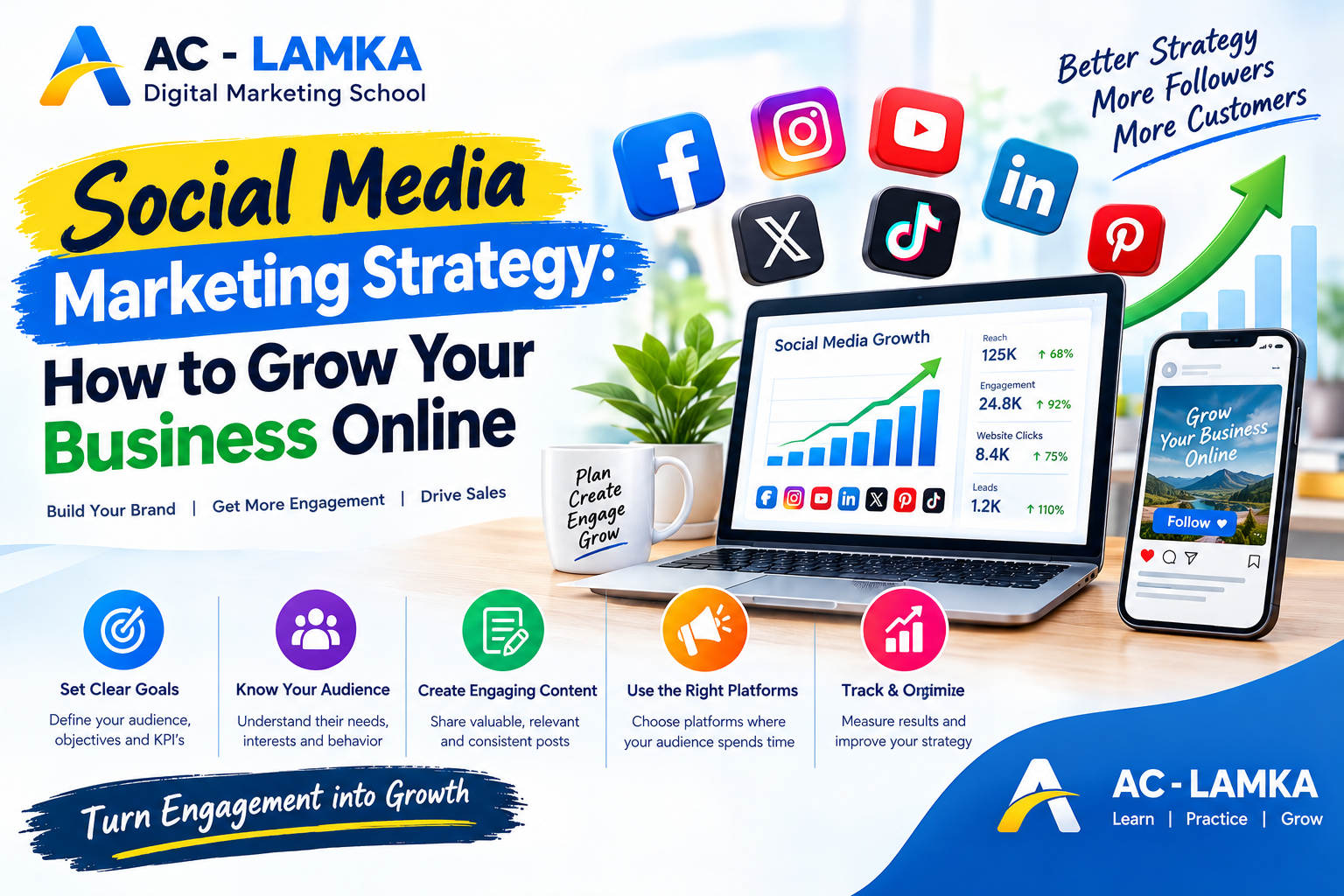
Social media has become one of the most powerful ways for businesses to attract customers, build trust, generate leads, and increase sales online. Whether you run a local business, e-commerce store, professional service, personal brand, or content-creator business, having a clear social media marketing strategy can help you reach the right audience and grow consistently. social media marketing for business
However, simply posting every day is not enough. Successful social media marketing requires the right audience, content strategy, platforms, advertising, engagement, and measurement.
What Is Social Media Marketing?
Social media marketing is the process of using platforms such as Facebook, Instagram, YouTube, LinkedIn, and other social networks to promote a business, communicate with customers, build brand awareness, generate leads, and drive sales.
A strong strategy combines:
- Organic social media content
- Short-form videos and reels
- Community engagement
- Social media advertising
- Lead generation
- Influencer and creator marketing
- Customer reviews and testimonials
- Analytics and performance tracking
1. Define Your Target Audience
Before creating content, identify exactly who you want to reach.
Consider:
- Age and location
- Profession or business type
- Interests
- Problems and challenges
- Buying behaviour
- Budget
- Products or services they need
For example, a digital marketing agency in Manipur may target local business owners, professionals, content creators, students, and entrepreneurs rather than trying to reach everyone.
The more clearly you understand your audience, the easier it becomes to create relevant content.
2. Choose the Right Social Media Platforms
You do not need to be active on every platform.
Choose platforms based on your audience and business goals.
Facebook: Useful for local businesses, communities, lead generation, and advertising.
Instagram: Excellent for visual brands, reels, products, services, and personal branding.
YouTube: Ideal for tutorials, educational content, reviews, long-form videos, and authority building.
LinkedIn: Useful for B2B marketing, professional services, recruitment, networking, and personal branding.
Start with two or three platforms where your target customers are most active and build consistency there.
3. Create a Content Strategy
Your content should have a purpose.
A useful content strategy can include five major categories:
Educational content: Teach your audience something useful.
Problem-solving content: Explain how to solve common customer problems.
Promotional content: Showcase your products, services, offers, and packages.
Trust-building content: Share testimonials, case studies, results, behind-the-scenes content, and your experience.
Engagement content: Ask questions, create polls, share opinions, and encourage conversations.
This approach prevents your social media profile from becoming nothing more than a collection of advertisements. social media marketing for business
4. Use Short-Form Video
Short-form videos are an important part of modern social media marketing.
Businesses can create:
- Product demonstrations
- Quick tutorials
- Customer testimonials
- Before-and-after videos
- Frequently asked questions
- Industry tips
- Behind-the-scenes videos
- Educational reels
- Business stories
You do not always need expensive equipment. A smartphone, good lighting, clear audio, and useful information can be enough to start.
Focus on providing value instead of trying to make every video perfect.
5. Build a Strong Brand Identity
Your social media profiles should look professional and consistent.
Use consistent:
- Logo
- Colours
- Fonts
- Visual style
- Brand voice
- Bio
- Contact information
- Call-to-action
Your profile should quickly answer three questions:
Who are you?
What do you offer?
How can people contact or buy from you?
A clear profile makes it easier for visitors to become followers and customers.
6. Use Social Media Advertising
Organic content can build trust, but paid advertising can help you reach targeted audiences faster.
Platforms such as Meta Ads allow businesses to promote products, services, lead-generation campaigns, website pages, and WhatsApp conversations. social media marketing for business
A basic advertising funnel can look like this:
Awareness → Engagement → Lead Generation → Follow-up → Sale
For example, a local business could run an awareness campaign first, retarget people who interacted with its content, and then show them an offer or lead-generation advertisement.
Always test different audiences, creatives, headlines, offers, and calls-to-action rather than spending the entire budget on one advertisement.
7. Use WhatsApp for Lead Follow-Up
Generating a lead is only the beginning.
Businesses should have a process for responding to enquiries quickly and professionally.
WhatsApp can be used for:
- Customer enquiries
- Product information
- Appointment requests
- Course enquiries
- Offers
- Follow-ups
- Order updates
- Customer support
A social media campaign becomes much more valuable when you have a clear system for converting conversations into customers. how to grow business online
8. Engage With Your Audience
Social media is not only about publishing content.
Respond to comments and messages, answer questions, thank customers for reviews, and participate in relevant conversations.
Engagement helps businesses build relationships and understand what customers actually want.
Try ending some posts with questions such as:
“What is your biggest challenge with digital marketing?”
“Which service would you like to learn more about?”
Simple questions can encourage meaningful conversations.
9. Use Customer Reviews and Social Proof
People often want evidence before buying from a business.
Use genuine:
- Customer reviews
- Testimonials
- Case studies
- Project results
- Screenshots of feedback
- Client stories
- Before-and-after examples
Social proof can reduce uncertainty and help potential customers feel more confident about contacting your business.
Never create fake reviews or misleading results. Build trust with authentic customer experiences.
10. Track Your Results
A professional social media strategy should be measured regularly.
Important metrics include:
- Reach
- Impressions
- Engagement rate
- Video views
- Profile visits
- Website clicks
- Leads
- Cost per lead
- Conversion rate
- Sales
- Return on advertising spend
Do not focus only on follower count.
A page with 5,000 relevant followers and regular customers can be more valuable than a page with 100,000 followers but no conversions. social media marketing in Manipur
Simple 30-Day Social Media Plan
Businesses starting from scratch can follow a simple monthly plan:
Week 1: Define your audience, optimise your profiles, and research competitors.
Week 2: Start publishing educational, problem-solving, and short-form video content.
Week 3: Add testimonials, offers, customer stories, and lead-generation content.
Week 4: Analyse performance, identify your best content, and improve your next month’s strategy.
Consistency is more important than trying to publish dozens of posts without a clear purpose.
Common Social Media Marketing Mistakes
Avoid these common mistakes:
- Posting without a strategy
- Trying to target everyone
- Using too many platforms
- Only publishing promotional posts
- Ignoring comments and messages
- Buying fake followers
- Using poor-quality content
- Not tracking conversions
- Giving up too quickly
- Running ads without a clear offer or landing page
Final Thoughts
A successful social media marketing strategy is built around the right audience, useful content, consistent branding, engagement, paid advertising, lead follow-up, and measurable business goals.
You do not need thousands of followers to grow your business. You need the right audience, the right message, and a system that turns attention into enquiries and customers.
For businesses in Manipur, India, and beyond, social media can become a powerful channel for building visibility, generating leads, and developing long-term customer relationships.
Learn digital marketing, social media marketing, SEO, Google Ads, Meta Ads, WordPress, WooCommerce, AI marketing, and other practical skills with ACA – LAMKA, presented by George Simte.
7 FAQs
1. What is a social media marketing strategy?
A social media marketing strategy is a planned approach to using social platforms to build brand awareness, engage customers, generate leads, and increase sales.
2. Which social media platform is best for business?
The best platform depends on your target audience, industry, content type, and marketing objectives. Facebook, Instagram, YouTube, and LinkedIn can each support different business goals.
3. How can social media help grow a business?
Social media can help businesses reach potential customers, build trust, showcase products or services, generate enquiries, drive website traffic, and support sales.
4. How often should a business post on social media?
There is no universal posting frequency. Businesses should focus on consistent, useful content that matches their audience and available resources.
5. Is social media advertising necessary for business growth?
Paid advertising is not always necessary, but it can help businesses reach specific audiences, generate leads, promote offers, and scale campaigns more quickly.
6. What type of content works well on social media?
Educational posts, short-form videos, tutorials, customer stories, testimonials, product demonstrations, FAQs, and problem-solving content can be useful depending on the audience.
7. How do I measure social media marketing results?
Track metrics such as reach, engagement, video views, website clicks, leads, cost per lead, conversions, sales, and return on advertising spend.
Table of Contents